Hmm. Yes I have replied quite often trying to help people with stuff here - and I try to be pretty regular.
I only took two weeks off I swear! - 
I found the discord chaotic - and random for the quality and accuracy of critique people might get, but you will get people to look at it. Most of them are students too but they are willing to help where they can. It has been a while since I left - so maybe it has improved.
TIP: If someone gives you the classic "something is off haha and I cant tell what haha" -- Its perspective. Its always perspective and anatomy - Trust me. Grab yourself a reference book for artists and copy it.
I met some great people there when I participated a couple of years ago - that I keep in contact with to this day - so def check it out.
Welcome!
@mimibanks77 Welcome to the forums! This is a very good format to post and ask for critiques - where people can provide examples, links, draw overs and videos all in one post!
Look at the improvement ttrpgbrewster got from our extended discourse -
Anatomy:
Here is a fantastic reference that I cannot believe is free. The Anatomy for Sculptors artist provides many free (and subscription based) 3d references that I have used many times for my studies.
Just remember - that learning anatomy for artists at the same time as learning how to draw is quite a challenge. It's like someone tossing you into a boxing ring - when you have not been taught how to stand - let alone how to strategize on offense or defense against a trained fighter.
Anatomy and drawing are two different things - learning the anatomy for artists and where muscles start has to start with bones. The muscles are always attached to two different bones/group of bones - to provide movement.
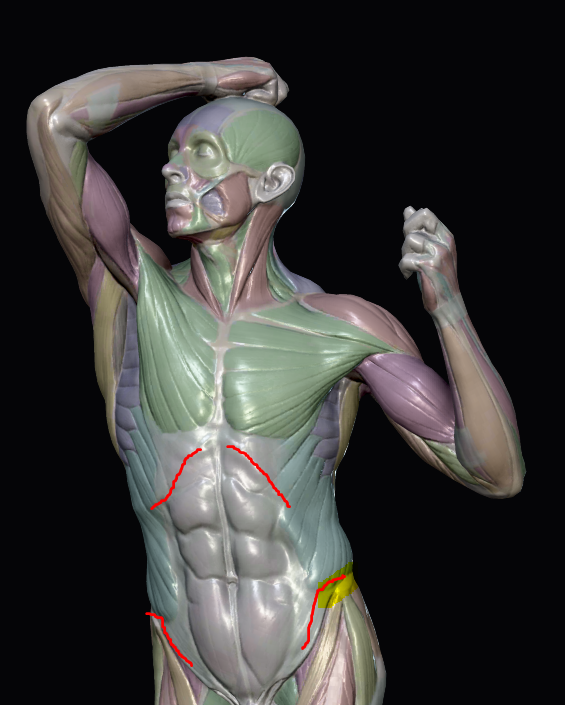
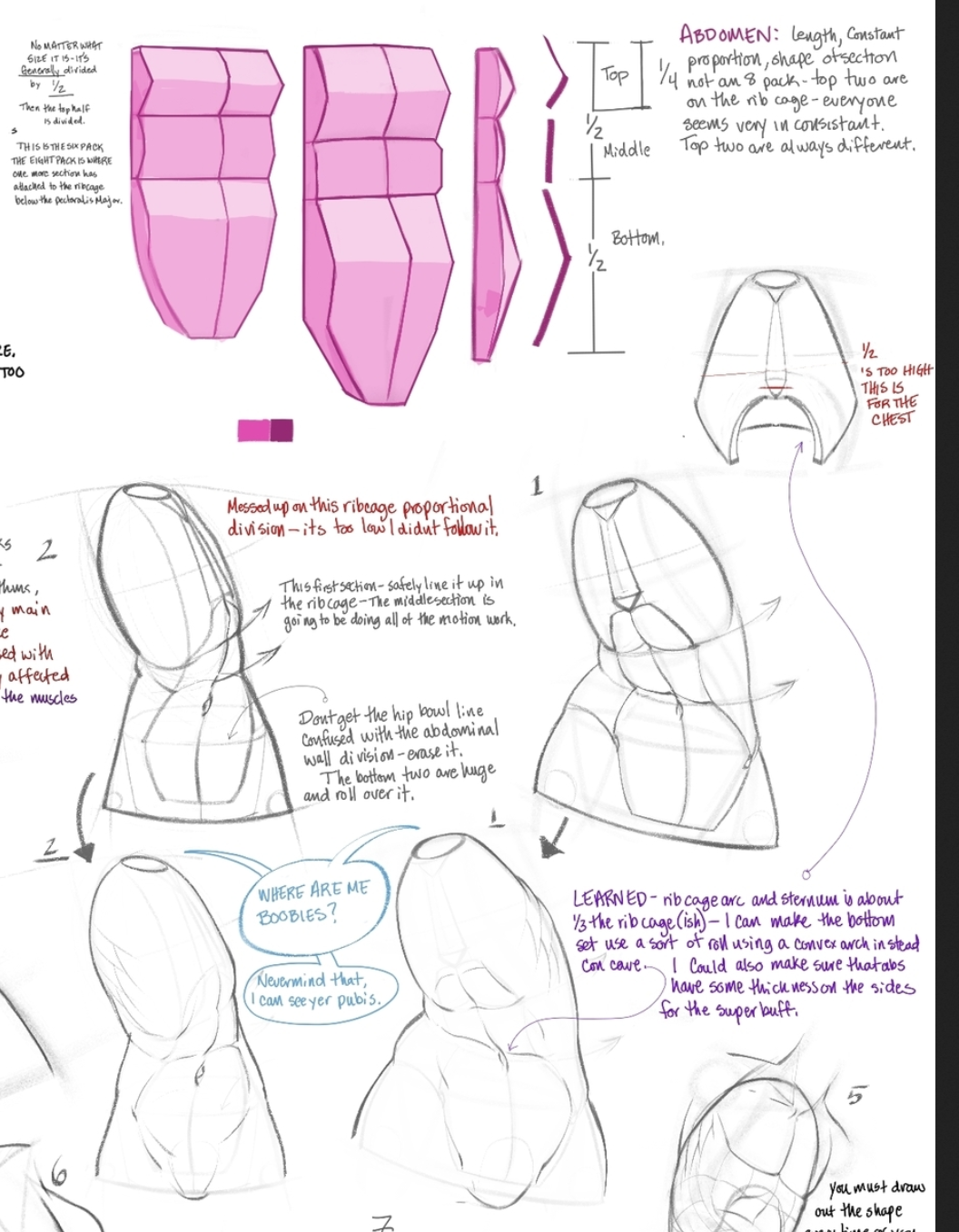
For the abdomen (rectus abdominis) it attaches at the hip bone and rib cage - but is also (kind of) part of the oblique!
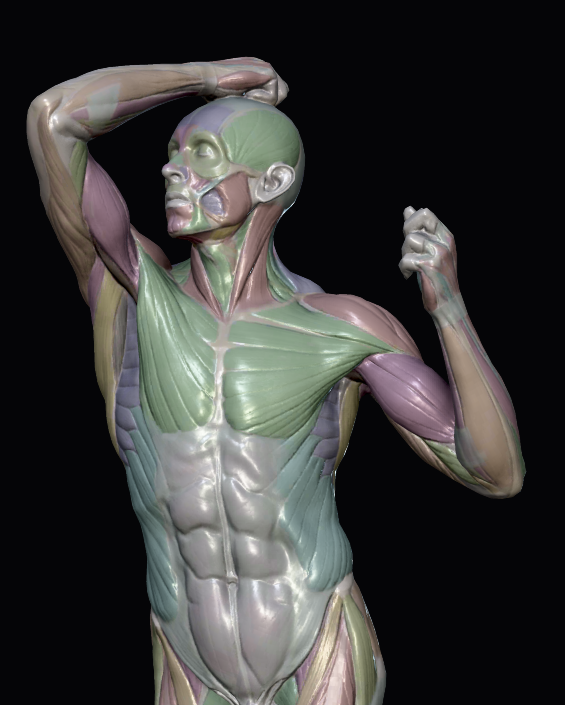
But how do we as artists - construct this and keep track of things while making something in 3D with no reference?
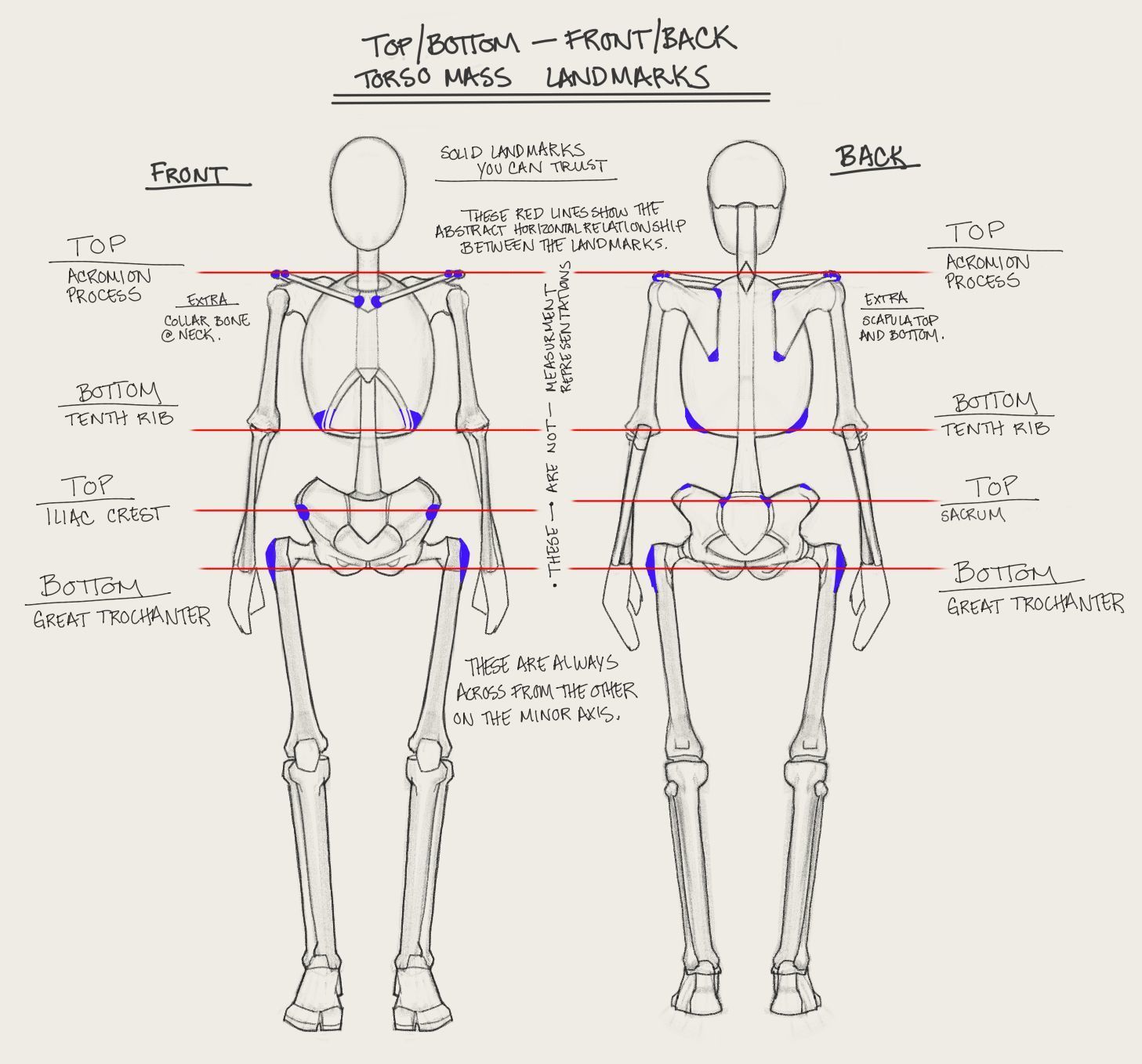
By constructing basic shapes - and using the landmarks - where the bones come through to the surface of the skin. Memorize all of the landmarks - here is the example of what I mean with the picture above.
-
Here is a reference I made for someone else. Feel free to use it.
-
-
Without going into much more detail - use this as a reminder for yourself going forward to ask these questions before you study.
Every muscle group is going to move a set of bones -
Which bones do they attach too?
Where do they start and stop? - and
What are their actions on the bones when the muscle contracts?
For the Rectus Abdominus - it is controlling the pulling forward motion of the rib cage and hip bone of the torso mass together on the front. So if you are studying the torso - you are studying the way that is moves the rib cabe and hip bowl first! The Rectus Abdominus controls only one motion. The way the torso twists and opens (or contracts in the rear) is controlled by other muscles
-
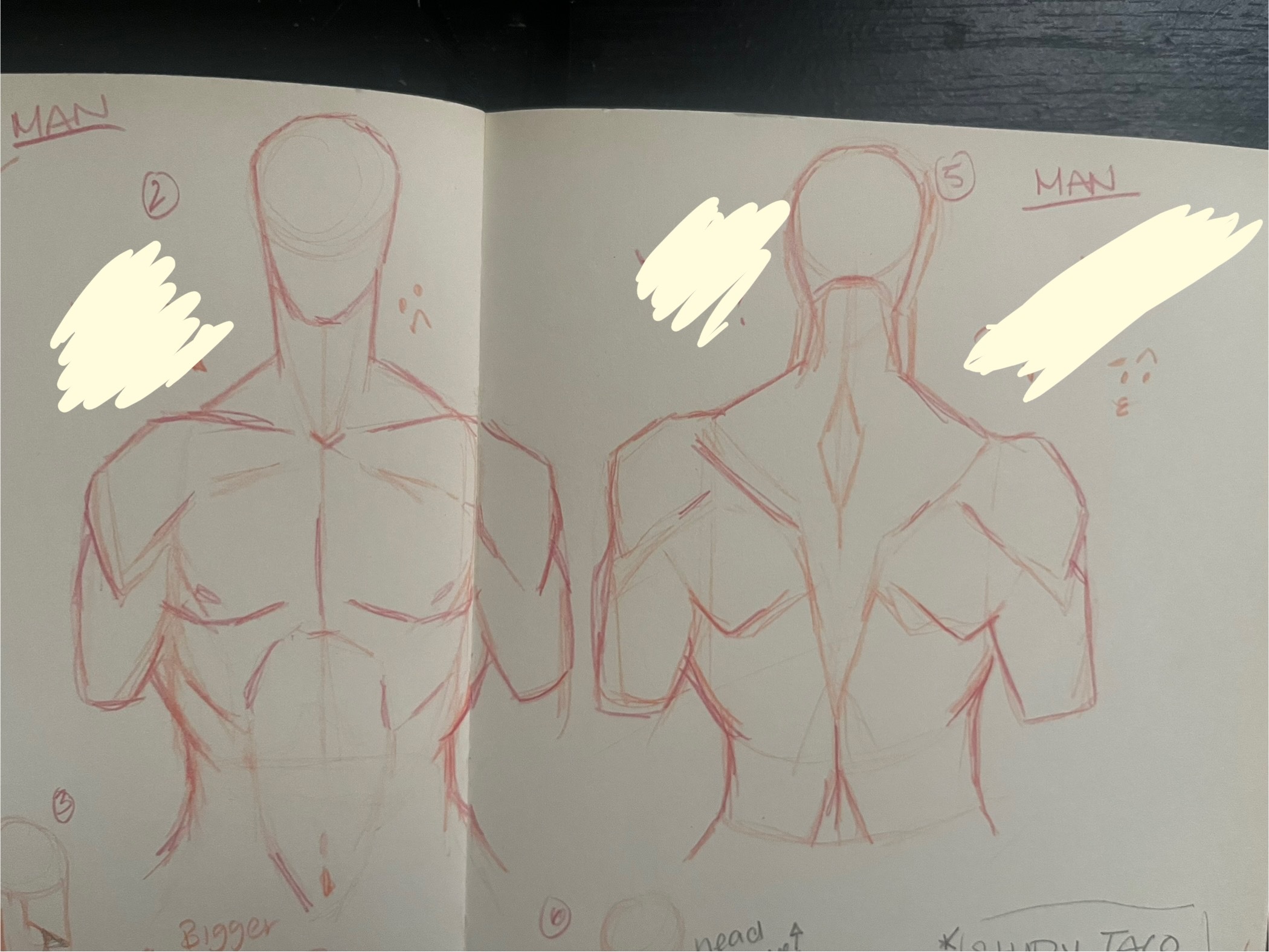
Here is a study of mine - breaking down the muscle into simple shapes for the purpose of constructing something out of nothing without reference. Try to do the same thing with your own studies.
-
-
-
-
Here is another free resource - albeit old - it is a classic.
Andrew Loomis - Figure drawing for All its Worth.
I recommend people copy 45, 48, 49, 50 and 51 -
The reason I recommend that - is because it makes one practice drawing figure construction - and learning the anatomical landmarks.
But remember - that anatomy - is different - it is not figure drawing. Anatomy starts on Page 57.
I hope that helps enough for now @mimibanks77 I've been known to beat a dead horse. Post more if you have more questions or find me on my blog thread here.
Ta