Welcome
Welcome to the forums r.nvessah! I can help you out no problem. Lets start with your post from the top.
FUNDAMENTALS and studying
When you study - you have picked a master. And you want to derive specific things from each study that you complete. Specifically the fundamentals. Now you can save this and revisit it over and over again - because you will not remember this for all of one sitting.
Simply put - what you should start doing when you study - is see how your chosen master is handling one of the four fundamentals below.
But what are they?
I'm glad you asked.
1. Drawing
2. Values
3. Edges
4. color
In that order. Every step controls the steps below it. But none of them control the step above them. For example - value and edges can control color. But color - cannot control edges and drawing. Make sense?
Each one of these fundamentals has a group of parameters that controls them. Not to mention hours of lessons regarding each one. Its a good thing we have studied this for hundreds of years and make step by step guides for our brains to latch onto one fundamental at a time.
Drawing:
It is the most important one by far. And perspective.
Ah the first year of every art school - time to break your whole knowledge system.
Drawing is just shapes and their orientation.
Shape and line.
Straight lines vs. Curved lines
Geometric shapes vs. Organic shapes.
Man made shapes vs. Nature shapes.
When drawing in the style that you have chosen - there is a pedigree to it whether you realize it or not. When you are painting you are still drawing - because you have to set up proportional relationships of shapes to one another.
While studying - instead of using a graph sheet. Try this.
Height - width - center
Over and over again. Height to width ratio will allow you to change the size of your drawing to whatever size paper you want. That is why we make sketch lines first to decide the height and width of the subject.
Just remember - that drawing goes from these three steps.
Sketch - height and width ratio - some design and perspective
Drawing - getting the perspective right, finalizing the design, stylization
Final Drawing - line art you can save for later. Not everything needs to be painted.
Value:
99.99% of art is composed of
"dark subject" against a "light background"....and
"light subject" against a "dark background"
When composing a finished piece - value is related to mood - our pattern recognition in our brain starts to sort things. So start composing a final with mood in mind.
Positive - light
Neutral - split/dramatic
Negative - dark
The Four Lights - Never use more than four lights in your art.
1. Key light - creates the shadow pattern on the subject
2. Fill light - illuminates the shadow - can be ambient light from environment, or bounce light from another surface.
3. Back Light - aka rim light - only used to separate the subject from the background.
4. Background light - Illuminates the area behind the subject to bring out composition, or details. To separate the planes and giving you an opportunity to create gradients.
Edges :
Now we get into the gritty of surface rendering - and speed! By speed I mean the eyepath - soft edges allow the eye to move through a piece freely. And hard edges - stop! the eye with hard contrasts.
Edges also control the form - the illusion of round and soft surfaces, or hard and jagged surfaces - to all of those in between.
Color:
Ah color - the final year of art school. How do we equate mood with art and all of its variables?
Composing with color - everything is warm colors vs cool colors and mixing them in between. You will often hear, "color is relative." Meaning that a color is only warm or cool in relation to the color that it is next too.
But just like value - 99.99% of art with color is:
"warm subject" against "cool background".....and
"cool subject" against "warm background"
Where composition comes into play is again with mood. "How do I choose a color?"
Emotion - Positive vs. Negative
Energy - Dynamic vs. Peaceful
Visibility - Certainty vs. Uncertainty
In my experience - color is an interesting narrative fundamental - more than some weird mystery that is unsolvable. It helps you relate the mood of the character or scene - quickly to your audience.
SOURCES
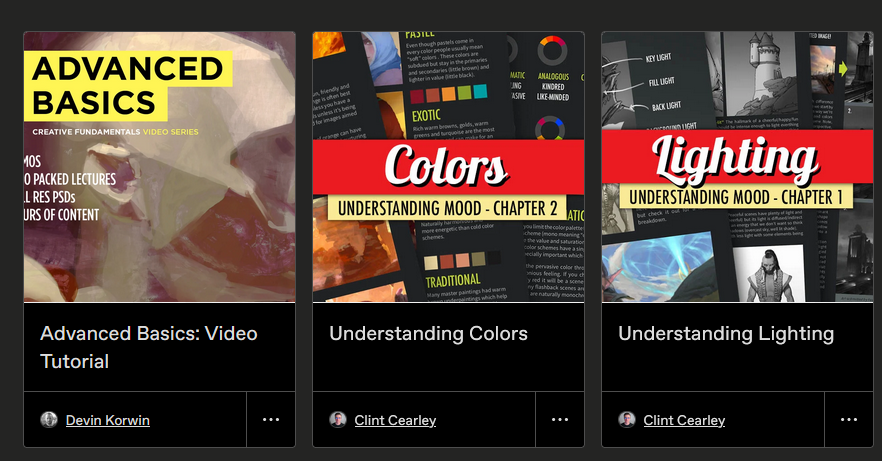
If you want more information from the source material - here are the linkS below. I have gone to art school, bought dozens of online courses, and can safely say that the fundamentals - no one explains are listed in the three links below.
FUNDAMENTAL PYRAMID
https://devinkorwin.gumroad.com/l/advancedbasics?layout=profile
UNDERSTANDING MOOD - VALUE
https://swatches.gumroad.com/l/chapter1
UNDERSTANDING MOOD - COLOR
https://swatches.gumroad.com/l/moodcolor
"Line Art to Render" The critique part
Edit: In italicized
This statement makes me think of a couple things are actually your weakness.
Knowledge of Process.
Lighting Consistency.
Value Pattern Composition
Knowledge of Process -
Your style has changed chronologically. It has "progressed" to be fully painted figures - when they were once toon/anime in style. There is not really a consistency in style there. Where most try to pick a lane and master it. But the positive shows that you have an interest in progression to more difficult understanding of form painting. You are AMBITIOUS. That is a good thing. But it can be confusing.
What most people dont realize starting out is that they dont have to be "right" or realistic to progress. They have to master a style to progress, and move onto more. They have to control mood and VIBE.
Lighting Consistency -
Your shadow patterns (and therefore light sources) are not consistent with strength of light and consistent direction on different surfaces. It is a bit all over the place sometimes.
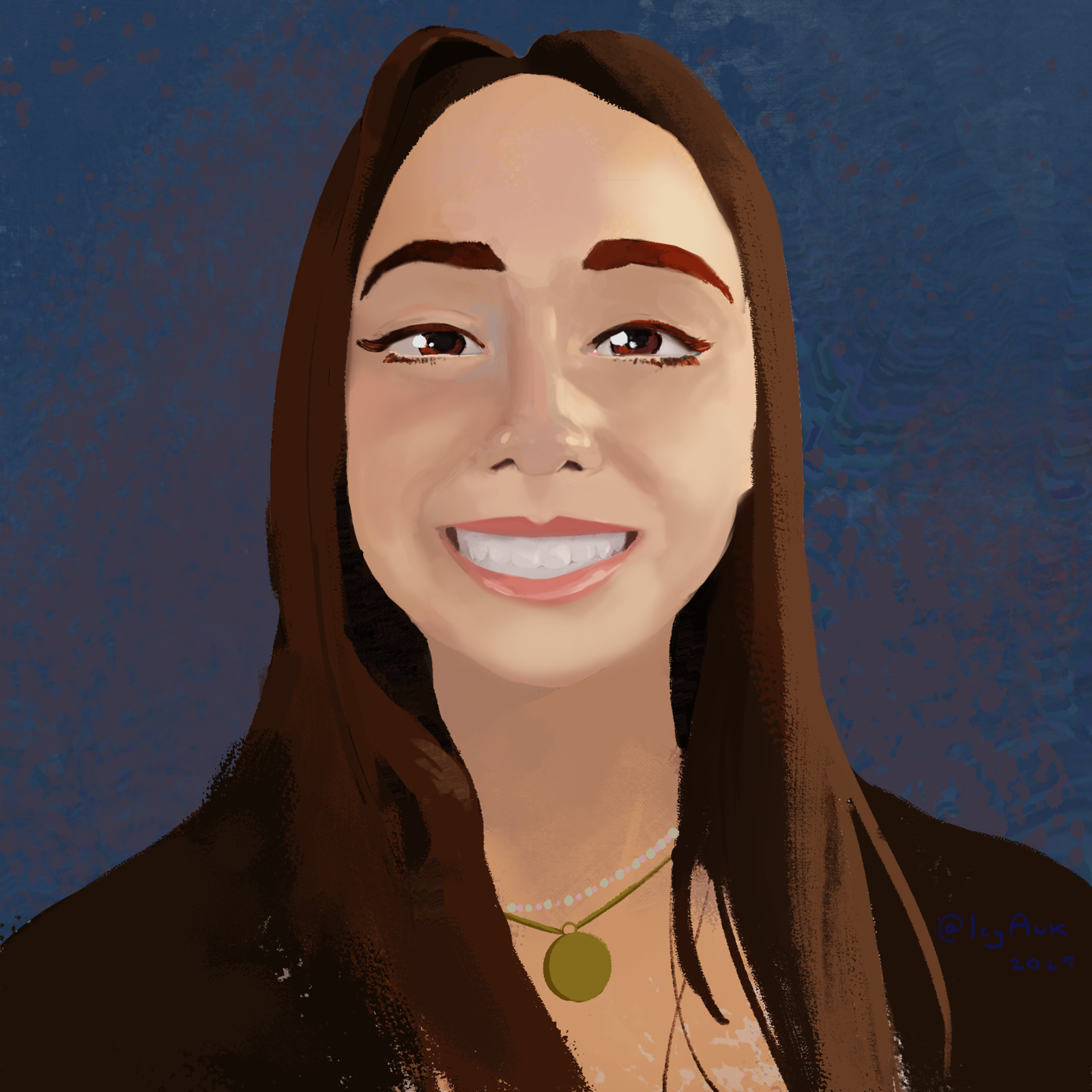
Your last piece has TWO key light directions. Because the hand has one on the top plain of the fingers, and the face has it on the left plain entirely. It is also blown out light crazy - and then not - (thus my strength and direction consistency stance)
It is inconsistent - because the hair has dark and light separations that to not share the key light of the face at all, neither does the blown out collar or shirt.
If your focal point - the face - has set the light direction - use that as the reference for every other single item in the piece. Add one of those fill lights in the shadow side if you want to and a back light separate the figure from the background. If you read the fundamentals on value section you will know exactly what I am talking about.
Value Pattern Composition
Composition is a real beast. But deciding the mood with positive, neutral, and negative is always a great place to start a composition. Adding in emotion, visibility and energy is a great place to finish making a composition.
Understanding subject vs background relationships and focal points - value pattern consistency - etc. I recommend some Proko videos for getting started with this. And the sourced material above.
Closing Remarks
I think your progression and style change is very positive. I think that your Improvement is commendable.
But I think that you benefit to pick and art master, god, or art parent of a style that you like. Maybe several, or a couple - one for drawing and anime - one for design - one for rendering form. Learn what that style does to look that way by manipulating the four fundamentals. Learn their digital process for lighting setup they use in their program specifially- layers in light - vs layering in shadow and color for your NOTAN and key light source and composition.
Then pick another art parent, god, master - and learn their fundamental manipulation tactics for form, composition, but mainly you need to start putting words to what it is that you like using the fundamentals and document them.
Take away the good things of fundamentals from the people that you love - and apply them and create your own style that you enjoy and says 'this is me'.
I think you are ready to study composition, and how to fit your subject matter into it - and how to manipulate it with the variable parameters found in the source material.
Flip your canvas often. Draw more than you think you should. Set time to render and plan out an art piece step by step for those fundamentals - and it will just get faster and faster.
I also think you should keep practicing simple shapes in perspective for your set ups - but really focus on the perspective, and natural pose of a human. We have to put stuff in our brain to pull from - and the only way you can do that is if you study from life a few sketches for gesture and building/constructing the body. Then you can do it easier without reference in perspective.
I encourage you to check out any of the other critique posts where I have posted - helping people understand these subjects.
Ta for now